
From WAIC to the China International Import Expo, the QT100 Traffic Management Robot by SkyEnGen Has Reached the Front Lines of Urban Traffic Governance
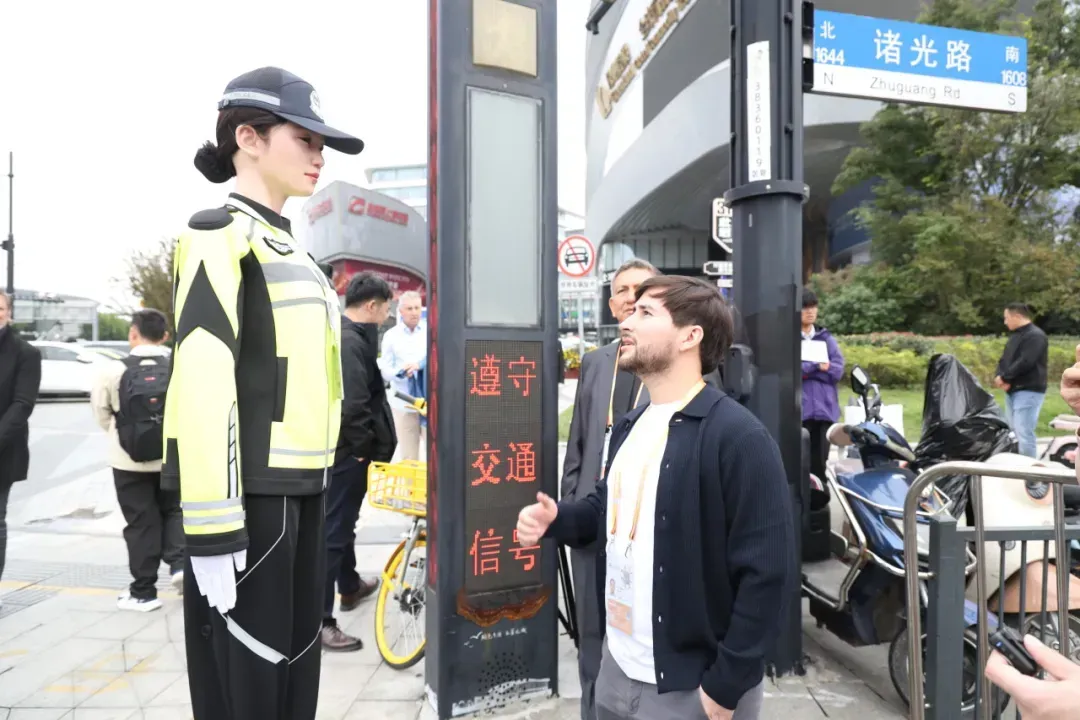
In November, Shanghai hosted the 9th China International Import Expo as scheduled. Business visitors from around the world gathered at the National Exhibition and Convention Center, where crowds flowed both inside and outside the exhibition halls. Along Zhuguang Road, a main road surrounding the venue, two special “new colleagues at the intersection” also got to work—the Qingtian Zhixing QT100 traffic management robot, working alongside on-site traffic police to direct traffic, guide public order, and provide convenient services, adding a touch of technology to the expo’s traffic support.
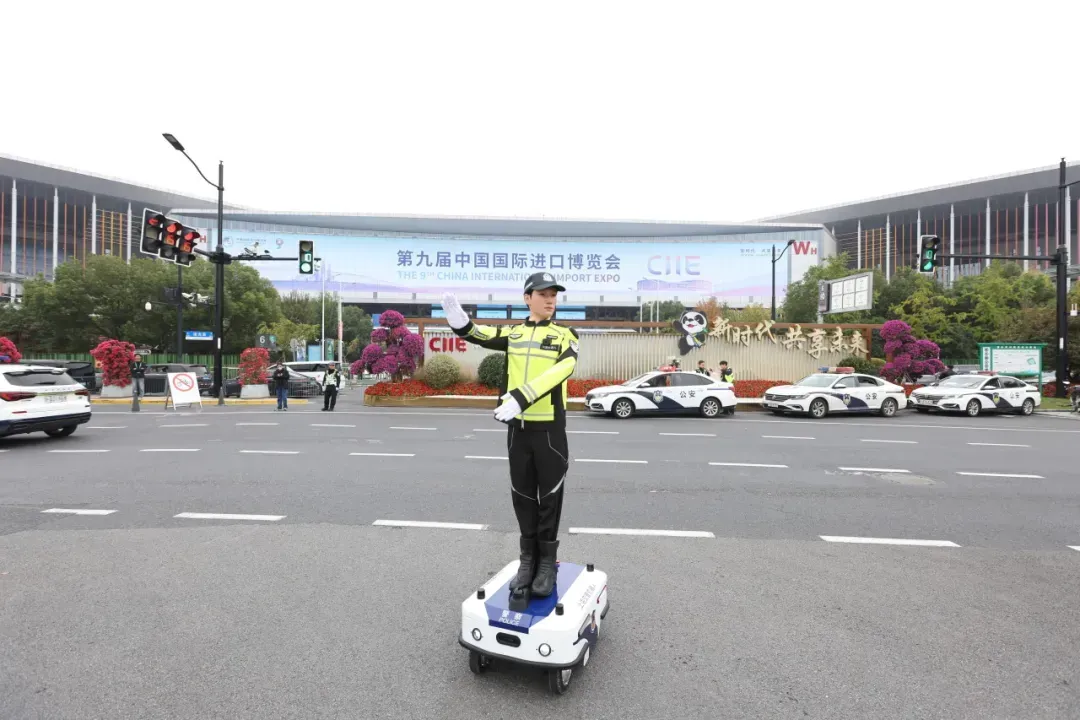
From WAIC to the CIIE: What Is Being Tested Is Not Just Functionality, but Scenarios
After its debut at the World Artificial Intelligence Conference in July, the QT100 traffic management robot has completed an iterative upgrade and returned to a national-level major event support scenario. From its exhibition debut to its continuous duty during the CIIE, the product has been tested not for isolated functions, but for its stability, usability, and operational efficiency under the combined conditions of real intersections, real pedestrian flows, and real weather conditions.
During the CIIE, the Qiantian Zhixing QT100 traffic management robot attracted attention from multiple media outlets, including The Paper, Jiefang Daily, Jiemian News, Shanghai Release, and Shanghai Legal Daily. Reports on applications such as traffic command, flexible guidance, multilingual services, and human-machine collaboration have allowed more members of the public to see the potential of embodied AI technology in urban traffic governance.
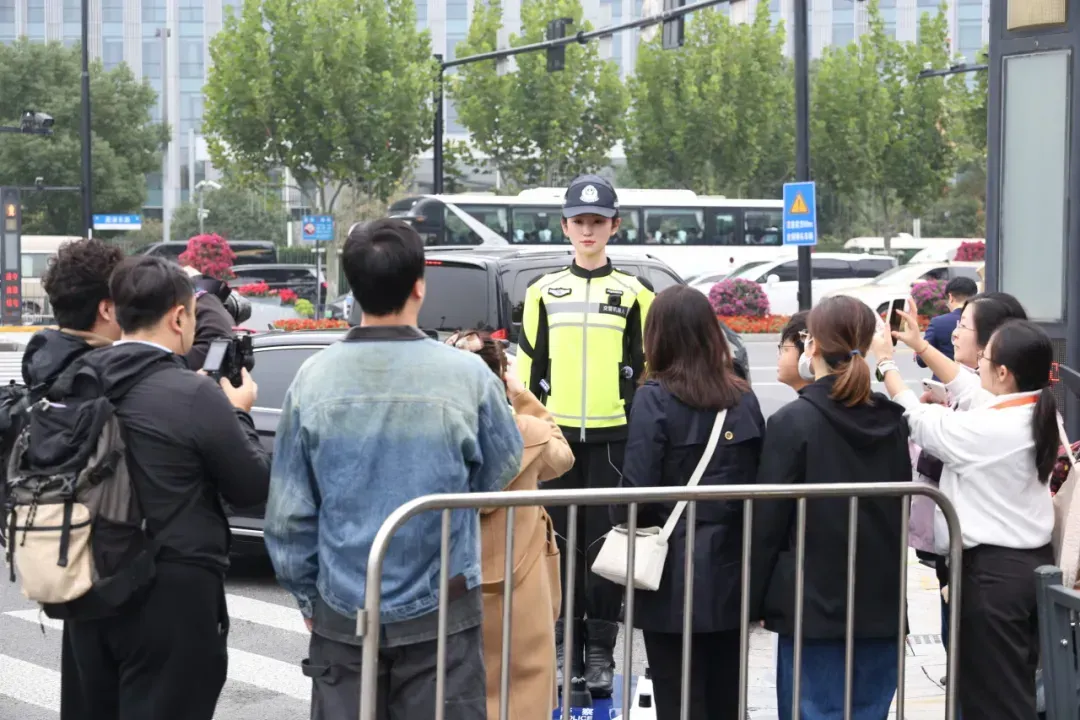
Rain-Soaked Duty: A Hard Test of Outdoor Environmental Adaptability
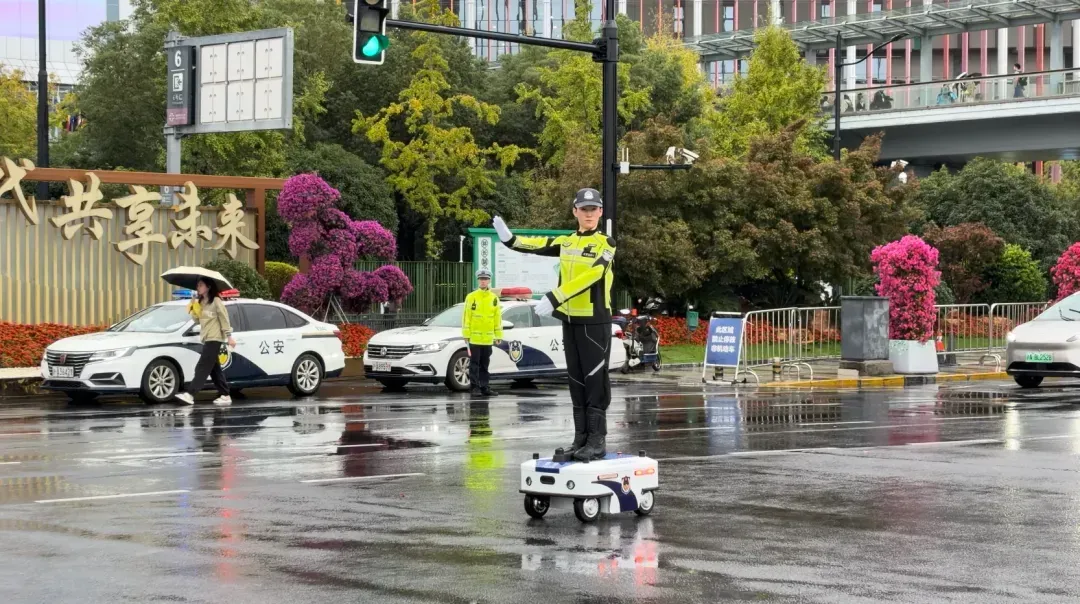
During the China International Import Expo (CIIE), Shanghai saw a drop in temperature and rainfall. For outdoor operations, weather is the first hurdle in routine deployment. Compared with the first-generation models unveiled during the World Artificial Intelligence Conference (WAIC), the QT100 Gen 2 deployed by Qiting Zhixing for CIIE support has undergone multi-dimensional upgrades tailored to complex outdoor operating conditions and real-world traffic management needs.
In rainy weather, the Qiting Zhixing QT100 Gen 2 traffic management robot, equipped with a newly upgraded waterproof chassis and automotive-grade perception system, continues to perform high-frequency, high-precision traffic direction on the streets. The Gen 2 has systematically upgraded waterproof protection for core components such as the chassis, torso, and cameras to ensure continuous perception and action output in the rain.
Rain-soaked duty not only tests the product’s real-world outdoor capabilities, but also turns the concept of “human-robot collaboration and assisted duty” into a reusable process: the robot performs standard traffic direction gestures according to preset strategies, while traffic police handle complex situations and on-site coordination. The division of responsibilities is clear, and the collaborative actions are repeatable.
Voice-based reminders: turning reminders about not wearing helmets, crossing stop lines, and other violations into standardized actions
At urban intersections, a large number of non-motorized vehicle riders fail to wear safety helmets properly, and pedestrians cross stop lines. These behaviors are frequent and repetitive, requiring timely detection and timely reminders.
For non-motorized vehicle riders who are not wearing safety helmets, non-motorized vehicles that stop beyond the stop line, and pedestrians who wait beyond the stop line or cross the road improperly, QT100 issues targeted voice reminders based on its detection results and preset strategies, turning “delivering reminders effectively” into a repeatable, standardized action.
At the same time, by combining target features with on-site orientation, the robot can deliver more targeted reminders, such as: “Comrade in black, please step back a little and wait for the red light behind the white line—it’s the safest place.” Personalized guidance is more likely to be heard and followed than a generic “Please pay attention to safety,” and it can also reduce the need for repeated reminders and persuasion.
Each detection, reminder, and on-site situation can be recorded as a process log, facilitating post-event review and operational debriefing. It should also be clearly noted that this traffic management robot has a clear boundary of responsibilities: it only provides auxiliary perception, real-time reminders, and information recording; it does not enforce laws or issue tickets.
“It serves as an intersection ‘outpost’ and ‘reminder officer,’” Wang Guobin, CEO and CTO of Qingtian Zhixing, said in an interview. Through a “human-machine collaboration” model, repetitive and routine reminder tasks are handed over to machines, effectively freeing up scarce police resources and allowing officers to devote more energy to core tasks such as handling complex traffic accidents and key security missions.
Appearance and attire: balancing practicality and recognizability
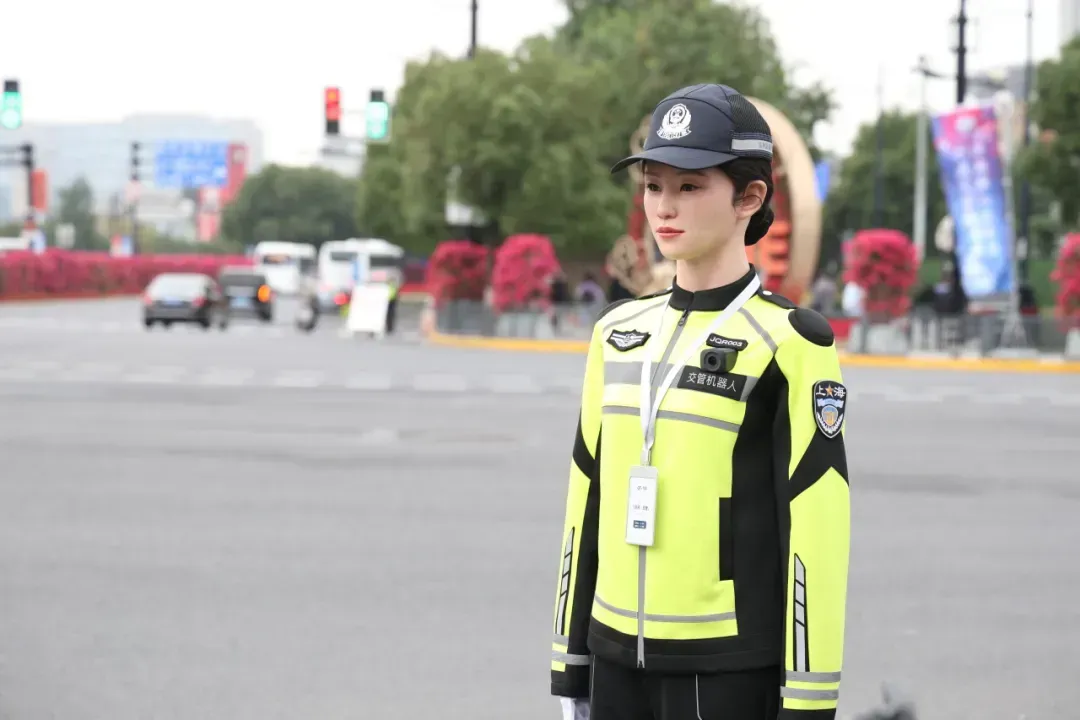
In terms of appearance, Professor Cui Yumei’s team at Donghua University has made targeted upgrades to the attire details of the second-generation robot. While maintaining overall recognizability, the design further balances a high-tech feel, safety, practicality, and aesthetics, helping the robot better blend into real road environments.
Under low-visibility conditions such as rain and nighttime, stable appearance features and recognizable attire help pedestrians and riders identify the robot in advance and proactively give way. This is a basic capability that is often overlooked in human-robot coexistence scenarios but directly affects on-site safety.
28 Languages: Extending Service Capabilities in International Scenarios
As a global-level international event, the China International Import Expo (CIIE) brings together exhibitors and buyers from around the world. To meet the needs of international scenarios, the QT100 Gen 2 traffic management robot features real-time interaction in 28 languages, transforming into a special “exhibition volunteer” during its off-duty hours.
“I would like to take a Didi, so where can I take the Didi?” When asked questions by business visitors, the robot can automatically identify the language of the conversation and accurately provide convenient services such as guidance on nearby traffic routes and information about exhibition hall locations, allowing business visitors from around the world to experience the warmth of Shanghai’s smart city.
From Event Support to Routine Operations: A Replicable Path to Implementation
The practical application at the China International Import Expo (CIIE) is a key part of the QT100 traffic management robot’s scenario validation and continuous iteration. From its debut at the World Artificial Intelligence Conference (WAIC) to its role in safeguarding the CIIE, the QT100 is accelerating its transition from a demonstration scenario for major events to everyday urban governance.
Currently, under the deployment of the Traffic Management Detachment of the Baoshan District Public Security Bureau in Shanghai, the Qingtian Zhixing traffic management robot has been deployed in a pilot routine duty program on the main road of Qilianshan Road and Nanda Road. The pilot runs from November 5 through mid-December, focusing on high-frequency, repetitive traffic management needs such as劝导 of non-motorized vehicle traffic violations during the morning rush hour, and further exploring the application of human-machine collaboration in everyday urban road governance.
Major event support validates reliability in non-routine scenarios, while routine pilot operations validate efficiency and cost in day-to-day work. Together, they form a complete evidence chain that demonstrates the product’s transition from “demonstration-ready” to “delivery-ready,” and provide operational standards and maintenance and operations experience for subsequent large-scale deployment.
Enabling Embodied AI to Truly Serve Urban Public Safety
From its debut at WAIC to its continuous presence at the China International Import Expo, and then to routine pilot deployments on urban roads, Qitian Zhixing has consistently focused on real-world needs in public safety and urban governance, exploring pathways for the practical application of embodied AI technology.
For Qitian Zhixing, bringing robots into real-world scenarios is not merely a product showcase, but a process of continuously validating technical capabilities, identifying real-world problems, and driving product iteration.
Looking ahead, Qitian Zhixing will continue to focus on application areas such as public safety, smart transportation, and security inspection. It will deepen technological R&D and scenario collaboration, continuously enhance its products’ adaptability in complex environments and their ability to serve diverse scenarios, and explore more possibilities for human-machine collaboration in urban governance.